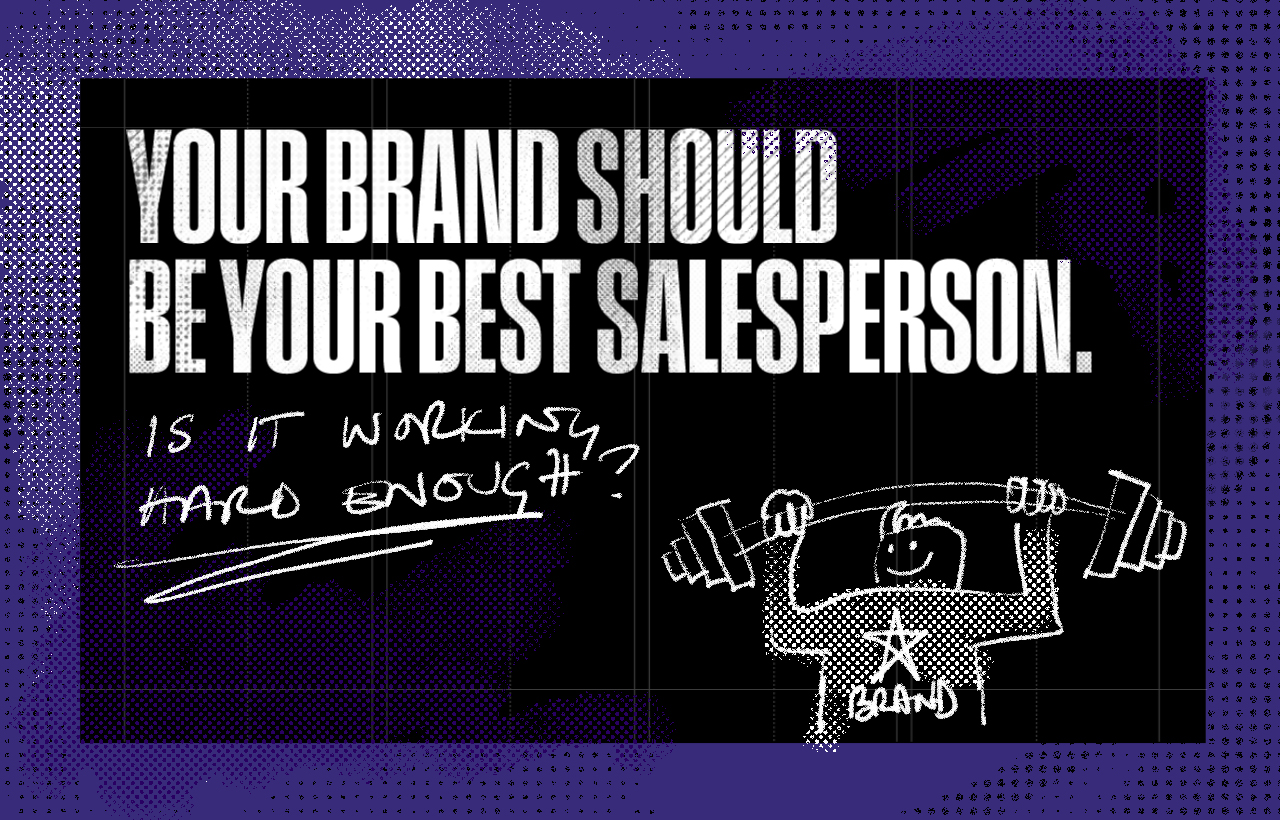
Your best salesperson works around the clock. They make a strong first impression without you being in the room. They communicate exactly the right things to exactly the right people. They disqualify poor fits early and attract good ones reliably. They build trust before a conversation has started, and they make every subsequent conversation easier because of the foundation they’ve already laid.
That’s what a brand that’s doing its job looks like.
Most brands don’t do all of that. Some don’t do much of it at all. And the businesses they represent are working harder than they should have to — because every piece of commercial work that the brand could be doing is instead falling on the people inside the business.
What it means for a brand to perform
There’s a tendency to think about brand in terms of aesthetics — how things look, whether the logo is strong, whether the website feels contemporary. Those things matter, but they’re not the point. The point is performance.
A brand performs when it does commercial work on your behalf.
It performs when a prospect visits your website and immediately understands what you do, who you’re for, and why you’re the right choice — before speaking to anyone.
It performs when a referral arrives already warm, because the referrer’s description of your business matches exactly what they encountered when they looked you up.
It performs when you send a proposal and the client comes back with fewer objections, because the brand has already established the credibility that makes the proposal feel like it comes from a business worth working with.
It performs when you can hold your pricing with confidence, because the brand positions you at a level where that price feels proportionate rather than ambitious.
It performs, most simply, when enquiries arrive from the right people, at the right scale, with the right expectations.
Where most brands underperform
The gap between what a brand could do and what it actually does tends to show up in a few consistent places.
The first impression doesn’t land right. Someone arrives at the website or looks you up on LinkedIn, and within a few seconds forms an impression that isn’t quite accurate — too small, too generic, too similar to everyone else in the space. The opportunity to shape that first impression has been missed, and the conversation that follows has to work harder to correct it.
The message is clear internally but doesn’t travel. Everyone inside the business knows what it does and why it’s good. That knowledge doesn’t translate consistently into what the brand says externally. The website reads slightly differently from the proposal, which sounds slightly different from the way the business is described in conversation. Nothing is wrong, exactly, but nothing is quite coherent either.
The brand doesn’t differentiate. This is the most common performance failure, and the hardest to see from the inside. The business is doing something specific and valuable, but the brand makes it look like every other business in the same space. In a market where prospects are comparing several options, a brand that doesn’t differentiate hands the decision to other factors — which usually means price.
The diagnostic question
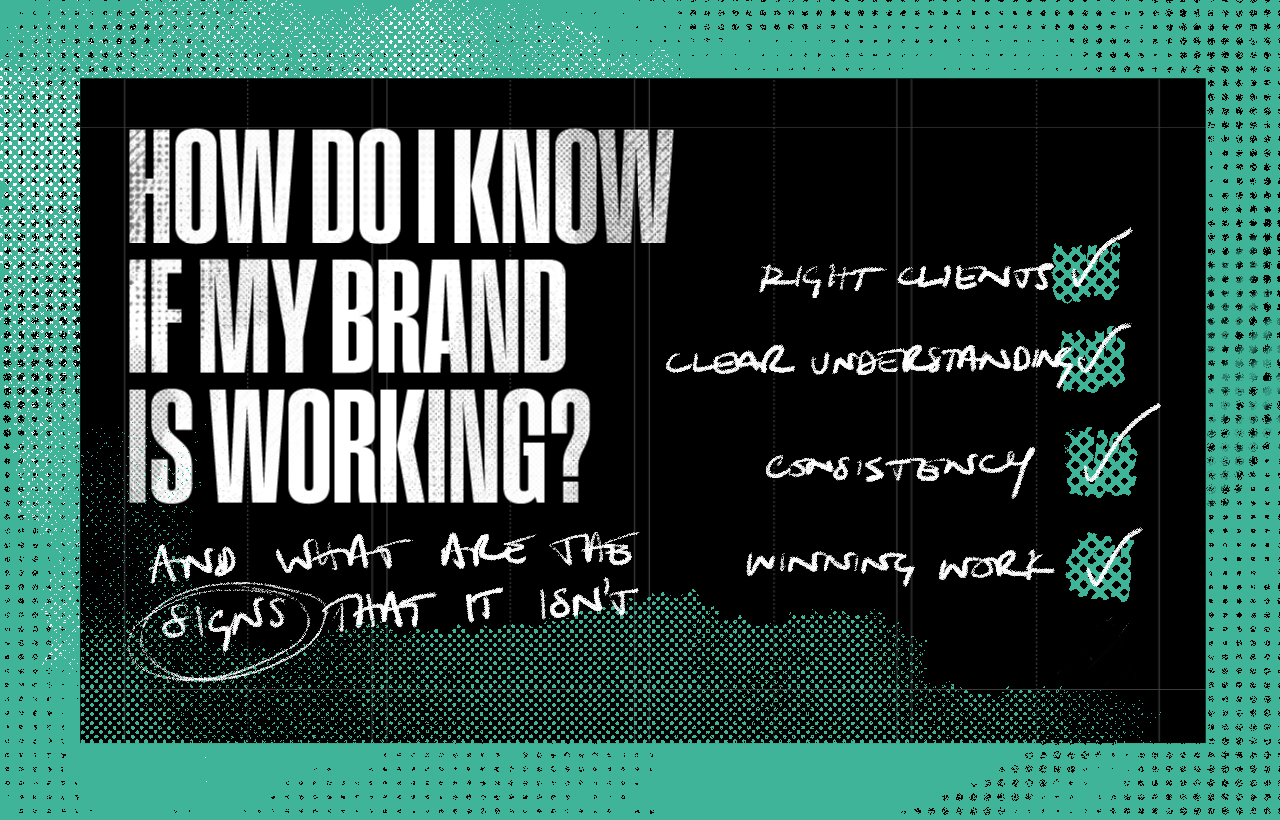
The simplest way to assess whether your brand is working is to ask: is it doing commercial work on my behalf, or am I doing that work instead?
If the enquiries that arrive are mostly driven by personal relationships and word of mouth — and would dry up if you stopped actively maintaining those networks — your brand is not supplementing your business development. It’s invisible.
If you’re consistently having to explain what you do, correct misimpressions, or overcome assumptions that the brand has inadvertently created, your brand is adding friction to the sales process rather than reducing it.
If your competitors look more credible than you know them to be, and you’re not sure why, your brand is losing a comparison it shouldn’t.
None of these are permanent conditions. They’re diagnosable, and they’re fixable — when you know what you’re fixing and why.
The 30-minute diagnostic
By this point in the month — if you’ve been reading these posts — you have a framework for thinking about what brand strategy is, what a full identity system looks like, when rebranding makes sense, and how to tell whether a brand is working.
The Discovery Call is where that framework gets applied to your specific situation.
It’s 30 minutes. It’s free. I’ll ask about your business, look at what you’ve got, and give you an honest view of where the brand is doing its job and where it isn’t. Not a sales pitch — a diagnostic. The difference between the two is that a diagnostic tells you the truth even when the truth is “actually, you’re in better shape than you thought.”
By now you’ve seen enough of the thinking to know whether it resonates. If it does, the call is the obvious next step.
I’m based in Surrey and work with founders and SMEs across the UK — Surrey and South London are home territory, but I work with businesses across the country, including a significant number in London. The call works the same wherever you are.