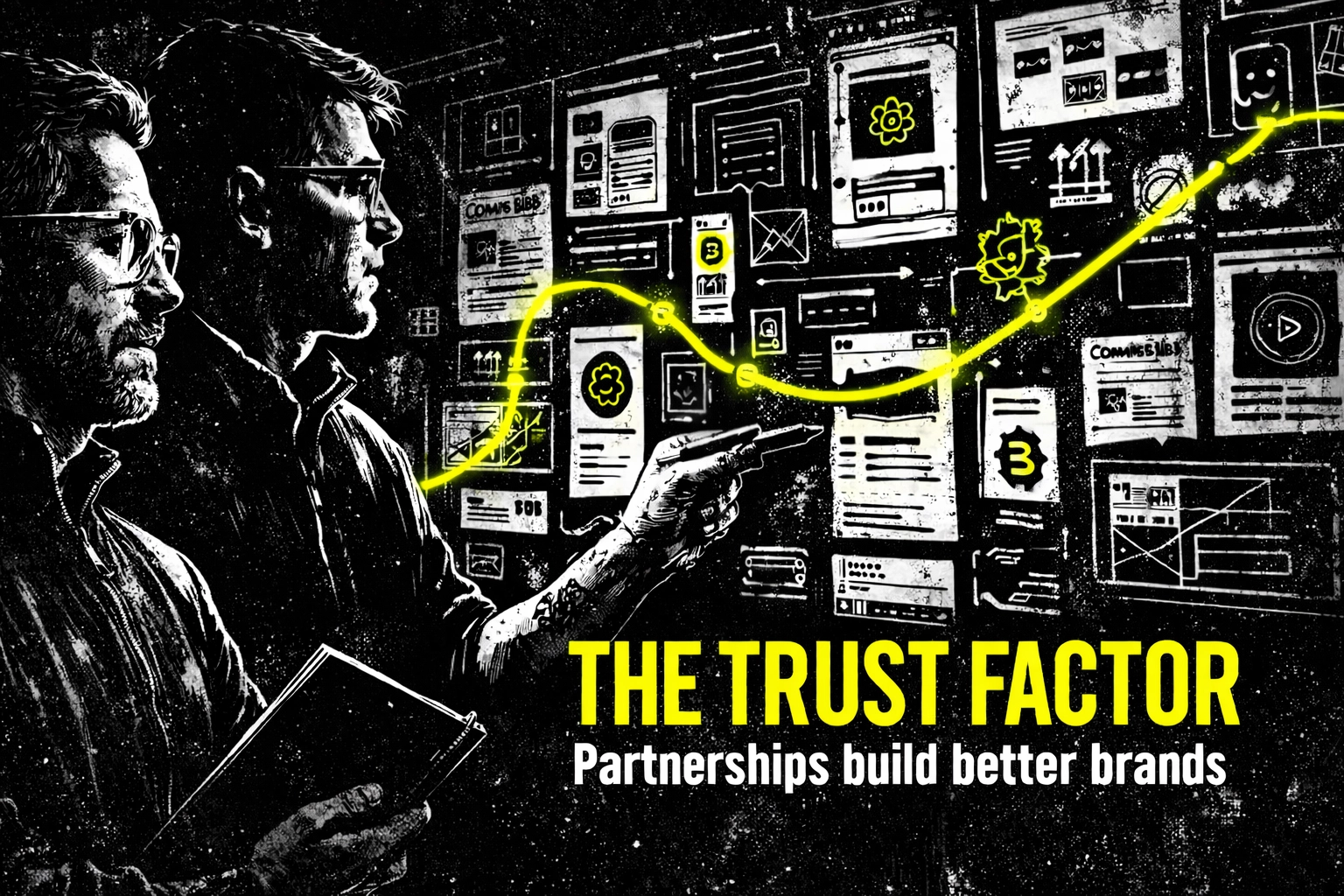
Trust isn't something you can buy. It's earned, brick by brick, through what you do and who you align yourself with.
When you partner with the right people, you're not just sharing resources or splitting costs. You're extending your credibility. You're telling the market: "These people meet our standards. We vouch for them." That's powerful. And it works both ways.
The best partnerships make both brands stronger. They create something neither could build alone: a reputation that's bigger, more resilient, and harder to ignore.

Why partnerships amplify trust
Think about the last time you tried something new because someone you trusted recommended it. That's partnership marketing in action. When brands collaborate, they borrow each other's credibility. A fashion brand partners with a sustainability nonprofit. A tech startup teams up with an established industry player. Suddenly, each brand carries the other's reputation forward.
This works because trust is transferable. Your customers already believe in you. When you partner with someone, you're saying, "We trust them too." That endorsement matters more than any ad campaign.
The key is choosing partners who genuinely align with your values. Forced partnerships stick out. Authentic ones feel natural, like they were always meant to happen.
The mechanics of building trust together
Partnerships don't create trust automatically. You have to work at it. Here's what actually moves the needle:
Show up consistently. Every single time. Meet your deadlines. Deliver what you promised. Do it again next month. Consistency beats flash every time. When you and your partner both maintain high standards, customers notice. They start to rely on you. Research shows that brands consistently delivering on promises see revenue increases up to 20 percent. That's not magic: it's earned.

Be transparent about everything. Pricing. Timelines. Problems when they arise. Nothing kills trust faster than hidden surprises. When you're open about challenges, customers respect the honesty. They know things go wrong. What matters is how you handle it. Partnerships that communicate clearly, even about the uncomfortable stuff, build deeper connections with their audience.
Own your mistakes. Both of you. When something breaks, fix it. Explain what happened. Say what you'll do differently. Then actually do it. Customers forgive honest mistakes. They don't forgive cover-ups or finger-pointing between partners.
Create genuine value for everyone. That includes your partner and your customers. One-sided partnerships eventually collapse. When both parties gain fairly, you're invested in each other's success. That shared stake comes through in how you talk about the partnership and how you deliver on it.

Align on ethics and purpose. This isn't fluffy brand talk. Customers care about what you stand for, especially now. When your values match your partner's values, it reinforces both brands. When they clash, even subtly, customers feel it. They start questioning whether you actually believe what you claim.
What trust actually delivers
Trust isn't a vanity metric. It's the #1 driver of repeat purchases in B2B relationships. That's not opinion: it's what buyers consistently report when asked why they stick with a vendor or switch to a competitor.
When customers trust you, they stop shopping around. They renew contracts. They refer colleagues. They become advocates who do your marketing for you, and they're more convincing than any sales pitch you could write.

Partnerships multiply this effect. You're not just building trust with your own audience anymore. You're building it with theirs too. That's exponential growth in credibility, especially when you partner with brands that serve adjacent markets or complementary needs.
Trust also protects you when things get rough. Markets shift. Competitors emerge. Mistakes happen. Brands with strong trust weather these storms better because their customers give them the benefit of the doubt. They've earned it through consistent, honest partnership over time.
Making it work
The partnerships that build brands are the ones where both parties show up fully. You can't half-commit and expect customers to fully trust you. They see through it.
Start by choosing partners who make you better. Look for shared values, complementary strengths, and a track record of following through. Then work together to deliver exceptional experiences, communicate openly, and support each other when challenges arise.
Trust takes time. There's no shortcut. But when you build it properly, through genuine partnerships and consistent action, it becomes your strongest competitive advantage.
Your customers will notice. Your partners will notice. And your brand will be stronger for it.