Every marketing tool out there promises the same thing: optimise your funnel, automate your emails, target your audience with laser precision. And sure, the numbers look good on paper. Click-through rates climb. Conversion pixels fire. Dashboards glow green.
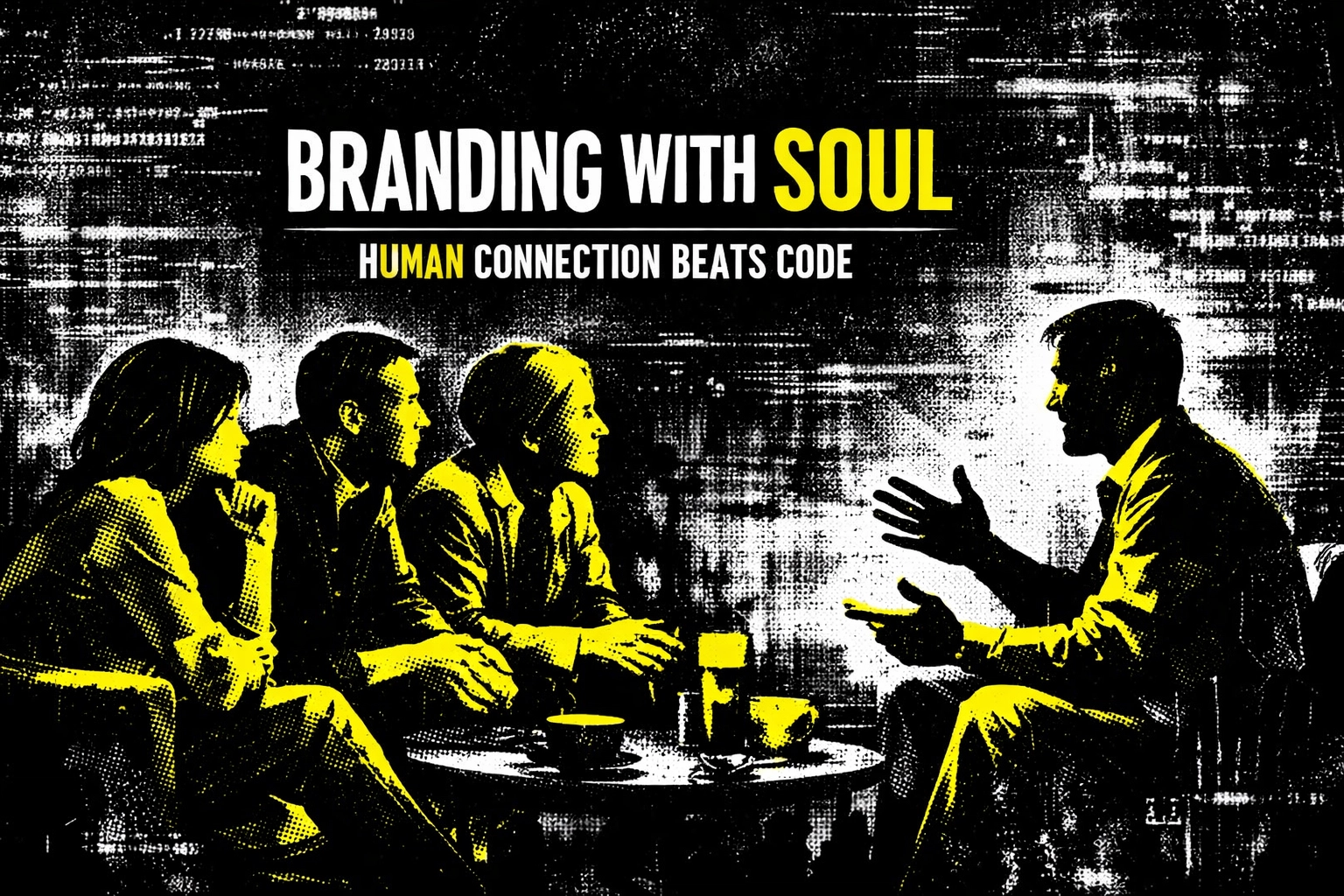
But here’s what the algorithms miss: people don’t fall in love with optimisation. They fall in love with brands that feel human.
You can A/B test a button colour a thousand times. You can segment your audience into micro-demographics. You can build the perfect customer journey map. But if there’s no soul behind it? You’re just noise.
The problem with playing it by the numbers
Pure data optimisation creates transactions, not relationships. It’s the difference between a cashier scanning your items and a bartender who remembers your drink.

Algorithms chase efficiency. They want shorter paths to purchase, lower acquisition costs, higher lifetime value. All valid goals. But they treat people like data points moving through a funnel.
The result? Brands that feel robotic. Copy that sounds like it was written by committee. Experiences that tick every box but leave you cold.
Research backs this up. Harvard Professor Gerald Zaltman found that 95% of purchasing decisions happen in the subconscious mind. That means most buying happens below the surface: driven by feelings, associations, and gut reactions that your split-test software can’t measure.
When you optimise purely for metrics, you’re speaking to the 5%. You’re missing the iceberg underneath.
Emotion beats efficiency every time
Here’s a stat that should make every data-obsessed marketer pause: customers who feel emotionally connected to a brand have a 306% higher lifetime value.
Not 30%. Three hundred and six percent.
These customers also recommend brands more, forgive mistakes faster, and stick around longer. They become advocates, not just buyers.
This isn’t about being warm and fuzzy for the sake of it. It’s about recognising what actually drives value. Emotional connection isn’t a nice-to-have. It’s the most reliable predictor of long-term customer worth.
But you can’t automate your way there. You can’t write an algorithm that makes someone feel seen, understood, or valued. Those moments come from human insight, not machine learning.

What “soul” actually means in branding
Brands with soul do three things differently:
They stand for something beyond profit. Look at Toms Shoes. Buy a pair, they give a pair. Simple. Clear. Human. The product is decent, but the mission is what sticks.
Or Patagonia. They actively tell you not to buy their stuff unless you need it. They’ll repair your jacket for free. They donate profits to environmental causes. The brand isn’t about selling outdoor gear: it’s about protecting the outdoors.
These companies make human connection part of their DNA. They’re not performing empathy for engagement metrics. They genuinely care about something bigger than quarterly revenue.
The second thing they do? They talk like real people. No corporate-speak. No jargon salad. Just clear, honest communication that sounds like it came from a human, not a content calendar.
The third? They’re consistent. Not in a “post three times a week” way. Consistent in values. When a brand says they care about sustainability, then packages everything in plastic? That inconsistency kills trust faster than any algorithm can rebuild it.
Building connection in a digital world
You don’t need to abandon automation entirely. Smart brands use technology to amplify human connection, not replace it.
Start with storytelling. Not your origin story (though that matters). The stories of the people you help. The problems you solve. The moments when your work actually changed something for someone.

Colour psychology matters too. Yellows feel optimistic. Blues build trust. But you’re not picking colours to manipulate: you’re using them to communicate clearly. To create the right emotional context for your message.
Sensory branding works. Think of Intel’s five-note chime. You hear it and know exactly what it means. Netflix’s “ta-dum” before every show. Sonic branding sticks in memory because our brains are wired for pattern recognition.
But these elements only work when they’re authentic. You can’t fake personality. Audiences smell inauthenticity a mile off.
The strongest brands invite people into something real. Dove’s “Real Beauty” campaign didn’t just talk about self-acceptance: it challenged beauty industry standards. That’s bold. That’s human.
Where tech fits in
Here’s the thing: I’m not anti-technology. I’m writing this on a laptop. You’re reading it on a screen. Technology is brilliant for distribution, analysis, and efficiency.
The mistake is thinking it can replace the human element entirely.
Use data to understand behaviour. Track what resonates. Learn from the patterns. But don’t let metrics dictate creativity. Don’t sacrifice personality for performance scores.
The best approach? Human insight guides strategy. Technology handles execution. You bring the vision and values. The tools amplify them.

When brands try to reverse that: letting algorithms dictate the message: you get bland, forgettable marketing that performs okay but builds nothing lasting.
Why this matters more now
Automation is getting smarter. AI writes copy. Chatbots handle customer service. Algorithms curate content. All useful. All improving.
But as technology handles more of the heavy lifting, human connection becomes the differentiator. It’s the one thing machines can’t replicate (yet).
Customers know when they’re talking to a bot. They know when they’re reading templated responses. And they’re hungry for something real.
That’s your opportunity. While everyone else chases perfect automation, you can build a brand that actually connects. That feels like a conversation with someone who gets it.
That’s not nostalgia. It’s strategy.
The balance that works
You don’t have to choose between data and soul. The strongest brands use both.
They track metrics to understand what’s working. They use automation to scale what matters. But they keep humans in the driver’s seat: making decisions, setting direction, building relationships.
Think of it this way: technology tells you what happened. Humans figure out why it matters and what to do next.
Your CRM can tell you a customer hasn’t purchased in six months. But it takes human insight to craft a message that brings them back. Not a “We miss you!” discount blast. A real conversation about why they left and how you can help.
The brands winning long-term aren’t the ones with the slickest automation. They’re the ones that make customers feel something. That build communities. That stand for values people actually care about.