There’s a version of this story that sounds simple.
You find a brand designer. You explain what you need. They go away and build it. You come back to something polished and ready. Neat. Transactional.
I understand why founders expect that. It’s how most professional service relationships work. You have a problem, someone with the right skills solves it, you move on. The expectation is reasonable.
Brand design isn’t that.
Most designers — myself included, earlier in my career — haven’t been honest enough about what the process actually involves. It’s easier to let people discover the reality once the project has started. By then the contract is signed and the awkward part is unavoidable.
So here it is, before you sign anything.
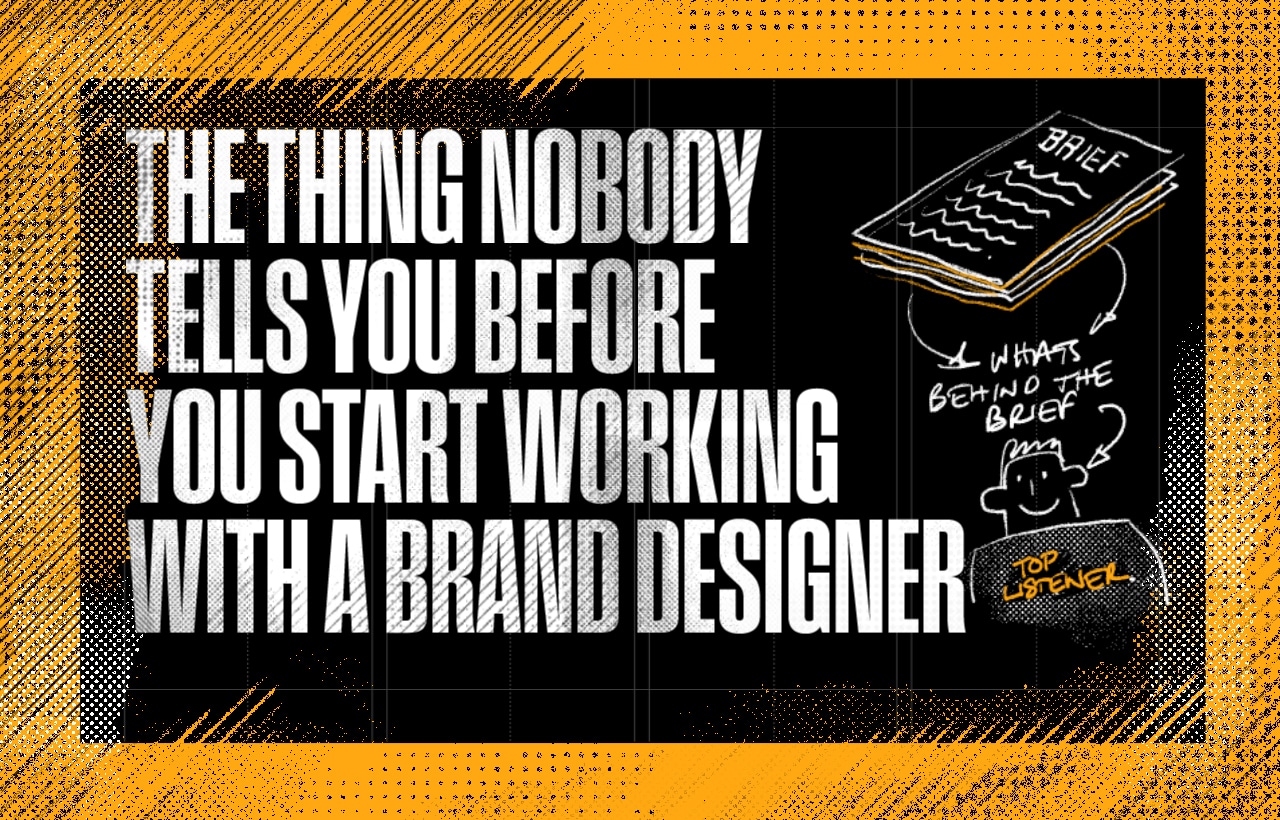
The brief you bring in is almost never the real brief
When founders write a design brief, they describe the version of the problem they’ve already decided on. They say things like: we need to look more premium. Our logo feels dated. We want to appeal to a more senior buyer.
These things might be true. But they’re rarely the actual brief.
The real brief is usually something more vulnerable. We’ve lost confidence in what we stand for. We’ve grown and the brand hasn’t kept pace. We’re winning work but struggling to articulate why people should choose us. Something isn’t working and we can’t name what it is.
Most founders don’t write that down. It feels too exposed. So they reach for a design problem instead — because design feels fixable, concrete, deliverable. The real thing feels less so.
This doesn’t make founders dishonest. It makes them human. But it does mean the most important work in a brand project often happens before anything gets designed. Finding the real brief is the first job.
I’ve sat in dozens of those opening conversations. The brief says one thing. The conversation says another. The brief says we need to modernise the visual identity. The conversation says we’ve been drifting and we know it and we don’t know how to stop.
Those are different briefs. One of them is the real one.
The questions you’ll be asked won’t feel like design questions
I ask things that surprise people.
Who exactly are you building this for? Not the target market — one person, described specifically enough that you could recognise them at a conference. What does your business believe about the problem it solves that most people in your sector wouldn’t say publicly? Where have you compromised on your positioning — and what has that cost?
These questions surface things. Assumptions that have been steering the business without ever being named. Positioning chosen from fear of narrowing down rather than genuine conviction. A direction the founder suspects isn’t quite right but hasn’t had the real conversation about yet.
I’m not asking to be difficult. I ask because the design has to be built on something real. Without that foundation, you get something that looks competent and says nothing. Capable, professional, and invisible.
The difference between a brand that makes someone stop and one they scroll past isn’t budget. It’s specificity. And specificity comes from honest foundation — from knowing exactly who you are and being willing to say it.
You can read more about what a brand strategy session actually looks like in practice at pattendesign.co.uk/brand-strategy-playbook/
The uncomfortable part is not a sign something’s wrong
This is what I most want founders to know before they start.
If a strategy session goes deeper than you expected — if it surfaces something you weren’t planning to talk about — that’s not a malfunction. That’s the work.
I’ve watched the moment a question lands differently than expected. There’s a pause. Something shifts. A founder starts talking about the thing they’ve been carrying for two years, not the thing they put in the brief. That thing — the real one — is where brand work actually starts. Everything that follows is building on it.
I should say clearly: these conversations aren’t therapy. I’m a brand designer, not a counsellor. But good strategy requires honest foundation. The discomfort is a byproduct of finding the real thing. It’s not the goal.
You’re going to have to trust something before it’s finished
There’s a point in most brand projects where you can’t quite see where it’s going and you have to trust the direction anyway.
That’s uncomfortable. Particularly for founders who are used to being in control — which is almost all of them. It’s practically a prerequisite.
The projects where founders hold on tightest to their original brief produce the least. Not because their instincts are wrong. Because holding on closes off the possibility of arriving somewhere better than they expected.
I’m not asking for blind faith. I’m asking for the kind of trust that comes from an honest first conversation, from understanding how the process works, and from seeing the reasoning behind decisions as they’re made. Trust that’s earned, not assumed.
The founders I’ve done my best work with have all said some version of: I don’t know exactly where this is going, but I trust the direction. That moment is when the work gets interesting.
What you can do before you start
None of this means showing up unprepared.
Think about what your business actually believes — not just what it does. Not the values statement. What you genuinely think about the problem you solve, the people who have it, and the way your market typically approaches it. That honest, specific position is the material everything gets built from.
Think about who you most want to serve — one person, not a segment. Think about the work you’re proudest of and what those projects or clients had in common.
And when you talk to a designer, tell them what’s actually going on. Not the polished version. The real one. The conversation that starts honestly is the one that produces something worth having.
If you’re weighing up whether a brand designer or a branding agency is the right fit for where you are, pattendesign.co.uk/what-is-a-brand-designer/ is a good place to think it through. And if you’re not sure whether you need brand strategy at all, pattendesign.co.uk/do-you-really-need-a-brand-strategy/ will help you work out where you actually are.


