Most brand projects have one conversation.
The brief. What do you want, what have you got, what are we building, let’s get started.
That conversation is necessary. But it’s not sufficient.
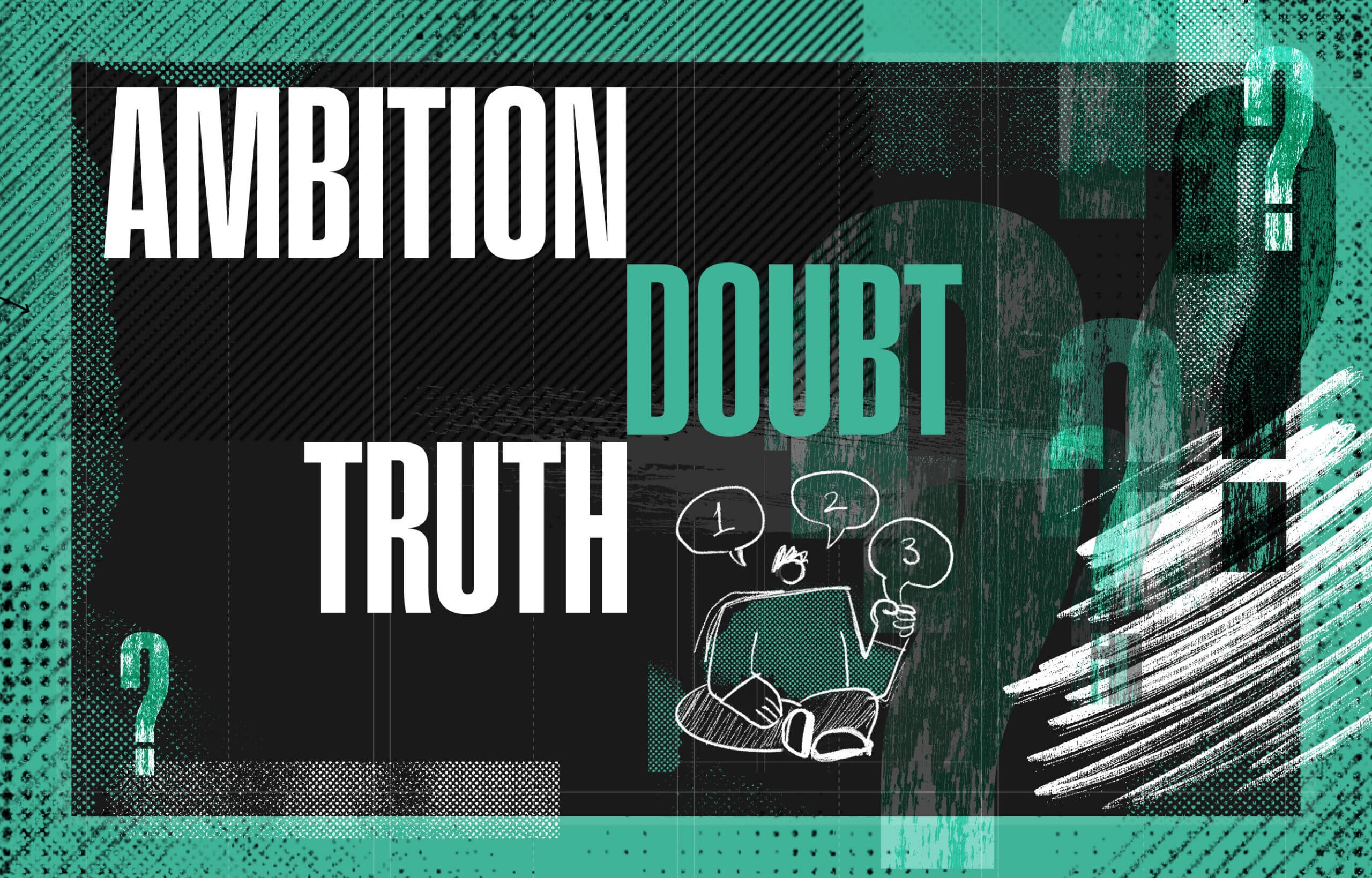
The best brand projects have three. And the difference between a project that produces something good and one that produces something genuinely useful for the business often comes down to whether all three conversations actually happened.
The first conversation: ambition
This is the one that usually does happen, in some form.
What does the best version of this look like? Where is the business heading? What do you want the brand to be doing for you in three years that it isn’t doing now?
These are the questions founders come prepared for. They’ve thought about growth, about the clients they want to attract, about the markets they’re eyeing. The ambition conversation is usually energetic, forward-looking, and useful.
What it produces is direction. A sense of where this is heading. Without it, brand work has no destination — you’re designing for the present, not building something that can carry the business forward.
The risk with the ambition conversation is that it becomes aspirational to the point of losing touch with reality. Ambition without honesty produces positioning that sounds bold and feels hollow. So the first conversation needs the others.
The second conversation: doubt
This is the one people skip.
The designer doesn’t want to seem like they’re looking for problems before the project has started. The founder doesn’t want to seem uncertain — you don’t turn up to a professional service relationship and lead with what you’re not sure about.
So the doubt conversation doesn’t happen. Everyone keeps things constructive. Forward-looking. And the thing nobody said — the real worry, the honest question, the gap between the ambition and what’s actually happening — stays unsaid.
Where it remains, somewhere underneath the strategy, shaping decisions without being named.
The doubt conversation is usually about one of a few things. It might be about whether the positioning is really as distinctive as the ambition conversation implied. Or about a difficult period — a lost client, a failed launch, a change in the market — that hasn’t been fully processed. Or about a direction the business has been heading that the founder privately suspects isn’t right.
These things don’t disappear because they’re not discussed. They come out later — in a design decision that hedges when it should commit, in messaging that qualifies when it should be direct, in a brand that looks confident and reads uncertain.
Naming the doubt honestly is what makes it possible to move past it. That’s not therapy. That’s strategy.
The third conversation: truth
The truth conversation is the hardest one to have and the most valuable when it happens.
It’s the conversation where you say what’s actually true about the business — not the aspirational version, not the polished version for the brief, but the real one. What this business genuinely is, what it genuinely believes, who it genuinely serves and why.
The truth conversation usually only becomes possible after the other two. You need the ambition to have something to be honest about. You need the doubt to have cleared the things that were obscuring the truth.
When it comes, it often sounds quieter than either of the previous conversations. Less energetic than the ambition conversation, less charged than the doubt one. It tends to be quite specific. The founder describes something small and precise — a particular way they work, a particular thing they believe, a particular type of problem they’re most useful for. And it’s true. You can feel the difference.
That truth is the foundation the brand gets built on. It’s what makes positioning stick. It’s what makes design decisions coherent rather than arbitrary.
Why most projects only have one
Because the brief is where most of the professional relationship is concentrated. The brief establishes scope, cost, timeline, deliverables. It’s the document that makes the engagement real.
And it’s hard to move beyond brief territory without explicit permission — without a shared understanding that the work requires all three conversations, not just the first one.
My job at the start of a project is to create that space. To make clear that the brief is a starting point, not a ceiling. That ambition is useful, doubt is useful, and truth is the destination.
For more on what the full strategy process looks like in practice, pattendesign.co.uk/brand-strategy-playbook/ goes into detail on each stage.