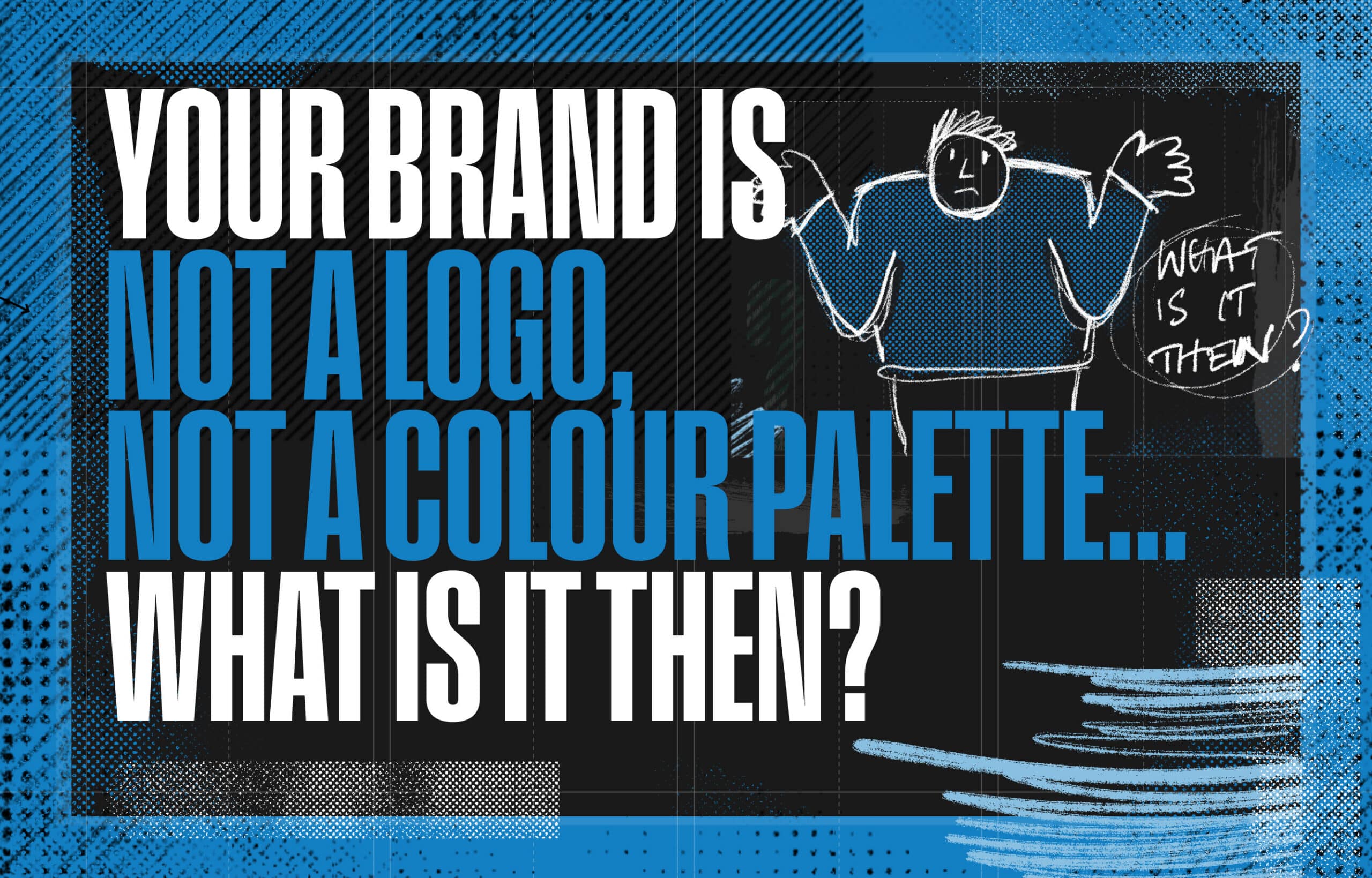
The brand isn’t the logo.
You’ve heard this. Everyone in this field says it. It has almost become a reflex — the first thing a brand strategist says to establish that they’re talking about something more serious than visual design.
But it’s true. And I think it’s worth being clear about what the brand actually is, rather than just what it isn’t.
A brand is a relationship.
Between a business and the people it exists for. Built slowly, through every interaction, every piece of work, every time the business shows up consistently. Through the way a proposal is written and the way a complaint is handled and the way a team member talks about the company to someone at a conference. Through every piece of design and every piece of copy and every decision that’s made in public.
Like any relationship — it takes time to build. It can be damaged by carelessness. It grows stronger when you stay honest. And it’s defined by the experience of the other person, not by your intentions.
That last part is important. You don’t get to decide what your brand is. You influence it, you shape it, you work hard to make it coherent and distinctive. But the relationship is defined by the person in it — by what they actually experience, what they actually feel, what they actually remember and recommend to others.
Which is humbling, if you think about it. All that strategy and design and careful thinking — and ultimately, the brand lives in someone else’s perception, not yours.
What this means for how you build it
It means that brand work is never done.
A logo can be finished. A brand guidelines document can be completed and filed. A visual identity can be signed off and launched.
But the relationship is ongoing. Every interaction adds to it or subtracts from it. Every piece of work either reinforces the brand’s position or contradicts it. Every time the business shows up inconsistently — saying one thing and doing another, looking one way in one context and different in another — the relationship erodes a little.
This isn’t an argument against brand projects. They matter. Establishing a clear visual and verbal identity, building a coherent strategic foundation, investing in the thinking that underpins everything — all of that shapes the relationship and makes it easier to maintain.
But a brand project isn’t the relationship. It’s an investment in the infrastructure that makes the relationship possible.
The relationship is built in the ongoing, daily, less visible work. In how consistently the business shows up. In how honest it stays. In how well it continues to understand the people it’s trying to serve.
What this means for how you invest in it
The way most businesses think about brand investment is as a series of discrete moments. The launch. The rebrand. The refresh.
Those moments matter. But they’re not the main investment.
The main investment is attention. Ongoing, deliberate attention to the relationship — to how the business is showing up, to whether the brand is still true, to whether the positioning still reflects what the business actually is.
That attention costs less than a rebrand and produces more. Because it catches the drift before the gap becomes a crisis. Because it keeps the brand honest as the business changes. Because it treats the relationship as something to be maintained, not something to be built once and left to look after itself.
The businesses I’ve worked with that have the strongest brands over time are the ones that understood this early. Not the ones with the best-looking identity at launch — the ones that stayed in conversation with their brand. That noticed when something was drifting. That asked the question when it needed asking.
What has been underneath this quarter’s writing
This post is the last one of a thirteen-week run that has been, at its core, about the relationship between a business and its brand — and about the working relationship between a founder and the person helping them build it.
The fellow traveller framing I use for my own work comes from this. I’m not an expert who has arrived and will show you the way. I’m someone who knows the terrain — who has been through the process enough times to understand where the difficult parts are and why they matter — and who is happy to navigate it alongside you.
The relationship that produces good brand work isn’t expert to client. It’s two people who are genuinely trying to find something true.
When that’s the dynamic — when the founder brings their specific knowledge of their business and the trust to look at it honestly, and the designer brings their knowledge of the terrain and the courage to say what they actually think — what comes out of it is something neither could have produced alone.
That’s what brand work is for. And that’s what the relationship makes possible.
If you’d like to start that conversation, pattendesign.co.uk/brand-strategy-playbook/ is a good place to understand the process. And if you want to know whether your brand is currently doing what it should be, pattendesign.co.uk/your-brand-should-be-your-best-salesperson/ will help you assess it.