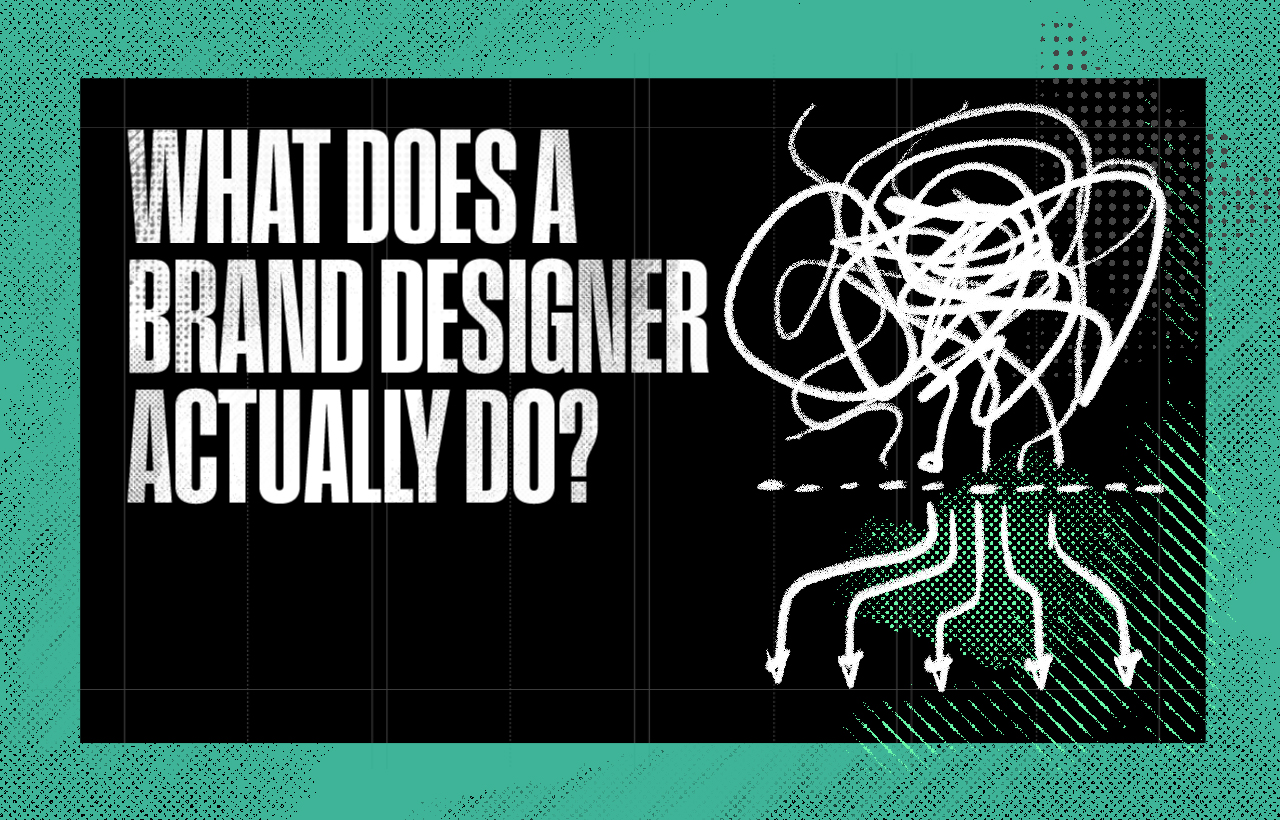
What Does a Brand Designer Actually Do?
It’s a reasonable question. The job title sounds obvious until you try to explain it to someone who hasn’t worked with one before.
Short answer: a brand designer helps you work out what your business stands for, then builds the visual and verbal systems to express it consistently. Long answer: read on.
First, the distinction that matters most
There’s a real difference between a graphic designer and a brand designer — and it’s worth understanding before you brief either.
A graphic designer takes a direction and makes it look good. They’re skilled, often excellent, and can produce beautiful work from a clear brief. What they’re not typically doing is interrogating the brief itself.
A brand designer starts earlier. Before anything is made, they’re asking the questions that most people skip: who is this business for, really? What makes it different from the competitors your clients also consider? What do you need people to feel the first time they encounter you — and is your brand currently making them feel that?
That distinction — decisions before design — is what separates branding from decoration.
What a brand designer actually delivers
In practice, the work spans several areas, usually in this sequence.
Brand strategy is where it starts. Understanding your market, your audience, and where you sit relative to both. Getting clear on what you stand for and who you’re genuinely for. This is the foundation everything else is built on. Without it, design decisions are arbitrary — and arbitrary design tends not to stick.
Logo and identity design comes next. Not just a logo — a proper system. A logo that works at every size and across every context, paired with a colour palette, typography, and a visual language that can scale consistently across your business. A logo in isolation is decoration. A visual identity system is infrastructure.
Brand guidelines translate all of that into a practical reference — how to use the brand correctly, and why certain decisions were made. Guidelines aren’t bureaucracy. They’re what keeps your brand coherent as your business grows and more people need to apply it.
Website design follows, because a brand that works perfectly in isolation but falls apart on your website isn’t a finished brand. Digital and physical need to speak the same language.
Tone of voice is often underestimated. The verbal identity — how your brand sounds, the words it uses and avoids, the register it strikes across different contexts — is just as important as how it looks. Especially now, when content is one of the primary ways clients encounter you before they ever speak to you.
When you actually need one
Not every brief calls for full brand strategy work. If you’re testing an idea and need something functional to get started, that’s a different conversation.
But if you’re at a moment of genuine change — launching something new with credibility on the line, having outgrown the brand you started with, entering a new market, or simply frustrated that what you present doesn’t reflect the quality of what you actually do — then proper brand design pays back.
I’m based in Surrey and work with businesses across the UK — London, Surrey, and South London being where much of the work is concentrated, but the problem isn’t geography-specific. The clients I work with are typically at exactly that point: they’ve built something real, the brand hasn’t kept pace, and there’s a gap between what they do and how they look that’s starting to cost them in ways that are hard to measure but easy to feel.
What working with me looks like
My process runs through four stages: Discover, Define, Develop, Deliver. The design decisions emerge from the strategic thinking, not before it. The result is a brand that feels right not simply because it looks good, but because it’s rooted in something true about your business.
If you’d like to understand what that might look like for you, the Services page has more detail on how each piece of the work is structured.