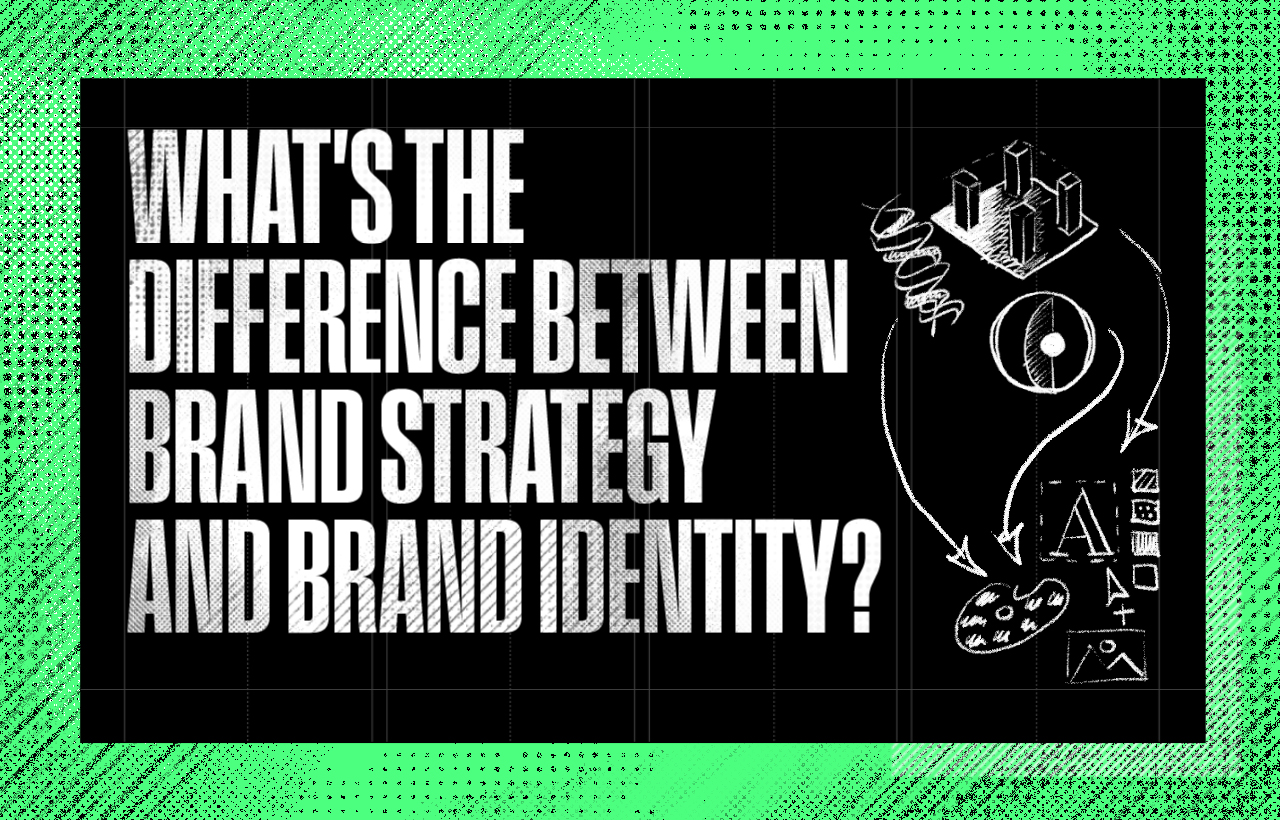
These two terms get used interchangeably so often that most people have quietly given up trying to distinguish them. Which is a problem, because they describe different things — and doing them in the wrong order is one of the most reliable ways to produce brand work that looks right but doesn’t perform.
Here’s the distinction that actually matters.
Brand strategy is the thinking
Brand strategy is the work you do before any design decisions are made. It’s the process of getting clear on what the business stands for, who it’s for, and how it wants to be perceived — and then making explicit decisions about all of those things rather than leaving them to chance.
In practice, it means working through questions like: who is this business really for, and who is it not for? What makes it genuinely different from the alternatives a potential client might consider? What do you want someone to feel the first time they encounter it? What’s the consistent story the business tells about itself, across every context?
The output of good brand strategy is a written document — a positioning framework, a strategic brief, a brand definition — that articulates the brand clearly enough that it can be designed against. It’s not creative work, in the traditional sense. It’s analytical and interrogative. And it’s where the most commercially important decisions get made, because it determines what everything that follows is trying to say.
A brand without a strategy is a brand that was designed on instinct. Sometimes instinct is right. More often, the absence of strategy shows up later — in an identity that could belong to anyone, in messaging that’s inconsistent across touchpoints, in a visual language that looks smart in isolation but doesn’t quite communicate the right things.
Brand identity is the expression
Brand identity is the designed expression of the strategy. It’s how the brand looks, sounds, and feels — translated into a visual and verbal system that can be applied consistently across every context the business operates in.
This is the work most people picture when they think about branding: the logo, the colour palette, the typography, the graphic language, the tone of voice guidelines, the way images are selected and treated. It’s the system that makes the brand recognisable and coherent, whether someone encounters it on a website, a proposal, a social post, or a business card.
Good identity work is creative, but it’s not arbitrary. Every decision — the typeface, the palette, the logomark — should be traceable back to a strategic reason. Why this colour? Because it conveys the quality and confidence the strategy calls for. Why this typeface? Because it positions the business as considered and authoritative without being corporate or stiff. Why this visual approach? Because it differentiates from three competitors who all use the same safe visual register.
When the strategy is solid, those reasons are easy to articulate. When it isn’t, identity decisions end up being made on preference — and preference produces brands that reflect what the designer or the client liked at that particular moment, rather than what the business actually needs.
What happens when you have one without the other
Strategy without identity produces a business that knows exactly who it is and can’t show it. The thinking is clear, the positioning is sharp, but the visual expression doesn’t reflect any of that. The brand is a well-defined invisible business.
Identity without strategy produces a business that looks the part but can’t sustain it. The logo is strong, the website looks good, but nothing quite coheres when you look across the whole picture. Messaging drifts. Different materials feel like they came from slightly different businesses. The brand looks polished in isolation and inconsistent in practice.
The combination of both — strategy first, identity second, each informing the other — is what produces a brand that actually works. One that’s clear enough to be expressed consistently, and expressed clearly enough to build recognition and trust over time.
The order always matters
This is the part that trips most people up. The instinct is to start with the logo — it’s visible, it’s tangible, it’s the thing you can point at. But starting with the logo before the strategy is settled means making creative decisions without a clear brief to make them against.
The logo becomes a best guess. The palette gets chosen on feeling. The visual language takes a direction nobody can quite articulate the reason for. And then, six months later, when the business needs to extend the brand onto a new platform or into a new market, the lack of strategic foundation becomes apparent.
Strategy first. Always. Identity follows from it.
If you’re thinking about brand work and want to understand what that process looks like in practice, the services pages have more detail on how I approach both.
I’m based in Surrey and work with businesses across the UK. The right starting point depends on where you are — and that’s a conversation worth having before any work begins.