“I just need a new website” is one of the most common opening lines I hear.
Sometimes it’s exactly right. The strategy holds, the identity holds, and the site itself has simply fallen behind — an old template, a slow build, something that made sense five years ago and doesn’t any more. In that case, a website project genuinely is the whole job.
More often, though, “I just need a new website” is standing in for something else. The site isn’t really the problem. It’s where the problem happens to be visible.
What the ask usually means
A founder describes a website that isn’t converting, isn’t communicating, isn’t landing the way it should. The instinct is to treat that as a build problem — better design, better copy, better structure. Sometimes that’s true. But just as often, what’s actually missing is underneath the site entirely: an unclear sense of who the business is actually for, positioning that hasn’t been named properly, a story that’s never quite been written down in one place.
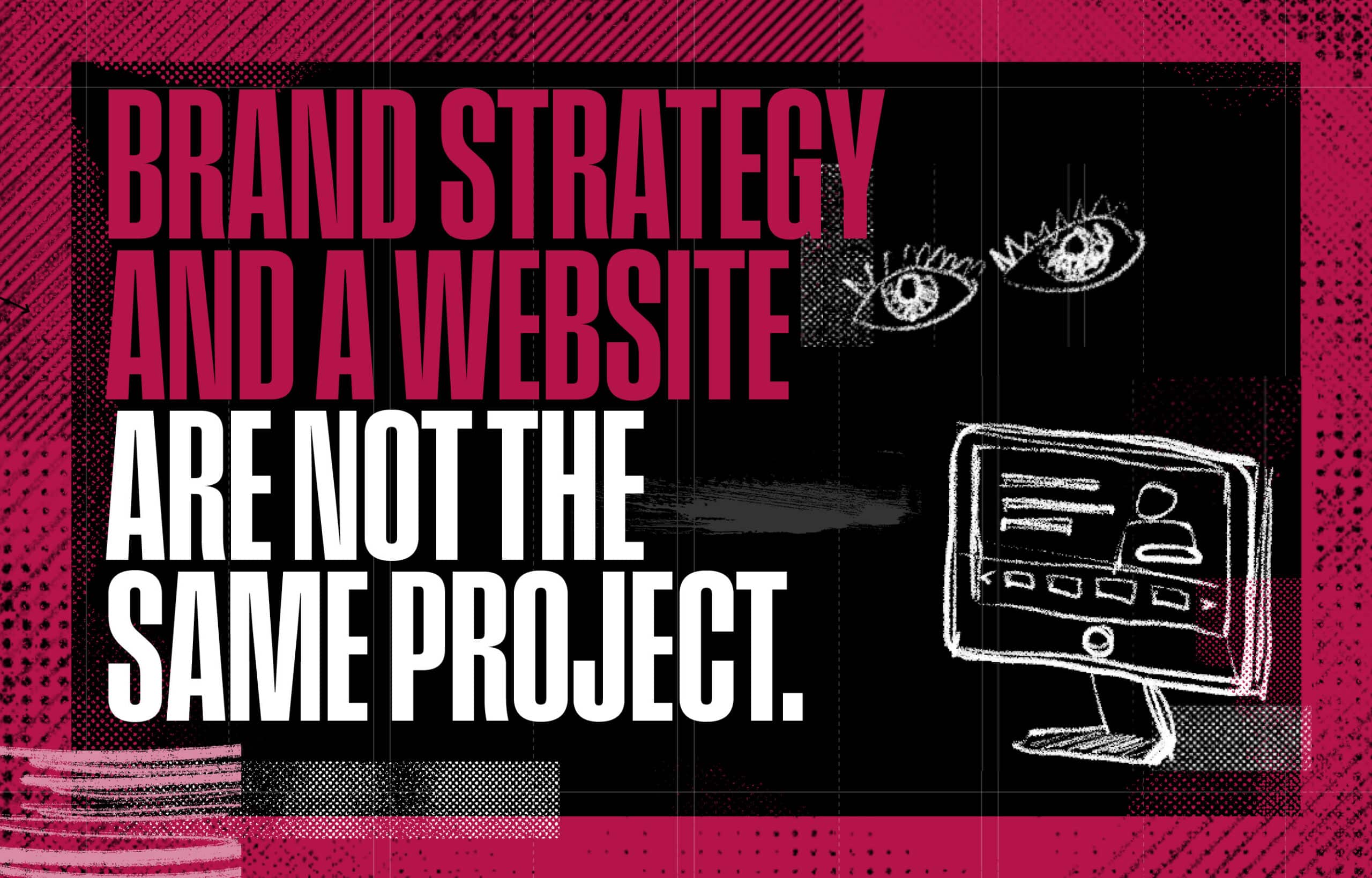
A website can’t fix that. It can only inherit it. Build a beautiful site on top of an unresolved brand and you get a beautiful version of the same confusion, loading slightly faster.
I’ve seen this play out in a fairly consistent pattern. A founder commissions a new site because the old one “doesn’t feel like us any more.” The new site goes live. Six months later, the same feeling returns, because the thing that didn’t feel like them was never really the template or the layout — it was the fact that “us” had never been properly defined in the first place. The site changed. The underlying gap didn’t.
That’s usually the moment worth naming out loud, even if it’s not what the person came in expecting to hear. Not to sell a bigger project. Because building the site first, in that situation, means building it twice.
What brand strategy and identity actually produce
Strategy and identity work isn’t a website with extra steps. It produces things a website build was never going to produce on its own: clarity about what the business is actually for, language that holds up under pressure in a pitch or a proposal, a visual system built to be consistent across everything the business touches, not just the parts a web developer can see.
None of that is a website. All of it is what a website needs in order to be built properly, rather than guessed at.
What a website build actually produces
A website build, on its own, produces something different and just as necessary: structure, technical execution, the actual mechanics of a site that loads properly, works on a phone, handles bookings or enquiries, and gets found. Strategy tells you what the site needs to say and to whom. The build is what makes it possible to say it, reliably, at scale, to everyone who visits.
Neither replaces the other. A strong strategy with a badly built site still loses people to slow load times and confusing navigation. A well-built site on an unclear strategy still fails to convert, just more smoothly.
How the two connect in practice
On a project that includes both, the order matters. Strategy and identity come first — not because one is more important than the other, but because a website build needs to know what it’s building before it starts, in the same way a builder needs a floor plan before pouring foundations. The structure of the site, the way it’s written, the priority given to different pages — all of that follows from decisions made in the strategy work, not decisions made independently by whoever’s holding the website brief.
That’s the difference between a site that happens to have the right brand applied to it, and a site that was actually built from it. In practice, that’s why identity work sits ahead of the WordPress build on any project that includes both, rather than the two running in parallel or the build coming first and the brand being retrofitted afterwards. The site inherits decisions. It shouldn’t be making them.
That ordering also protects the parts that are easy to skip when time is short. Booking integrations, contact forms, the structural choices about which pages matter most — those are all easier to get right when the strategic priority is already settled, rather than being decided page by page as the build progresses.
How to tell which conversation to start with
If you’re not sure whether what you need is a new website or a new brand underneath the one you have, a useful test is this: imagine the current site rebuilt exactly as it is, just faster and better designed. Does that solve the actual problem? If yes, it’s probably a website project. If the honest answer is “it would look nicer, but I don’t think it would change anything,” that’s usually a sign the site isn’t the real issue.
Either way, the first conversation doesn’t need to resolve that question in advance. That’s what it’s for. Plenty of people arrive certain they need “just a website” and leave the call with a clearer, quite different brief. Plenty of others arrive assuming they need a full rebrand and leave knowing the site was genuinely the only thing that needed attention. Both are fine outcomes. Neither was obvious from the outside before the conversation happened.
More on how strategy and identity work fits together at pattendesign.co.uk/brand-strategy-vs-brand-identity/.