Something shifts, usually around year three.
The clients get better. The conversations get more serious. Someone senior, at a business you actually want to work with, asks for a link before the call.
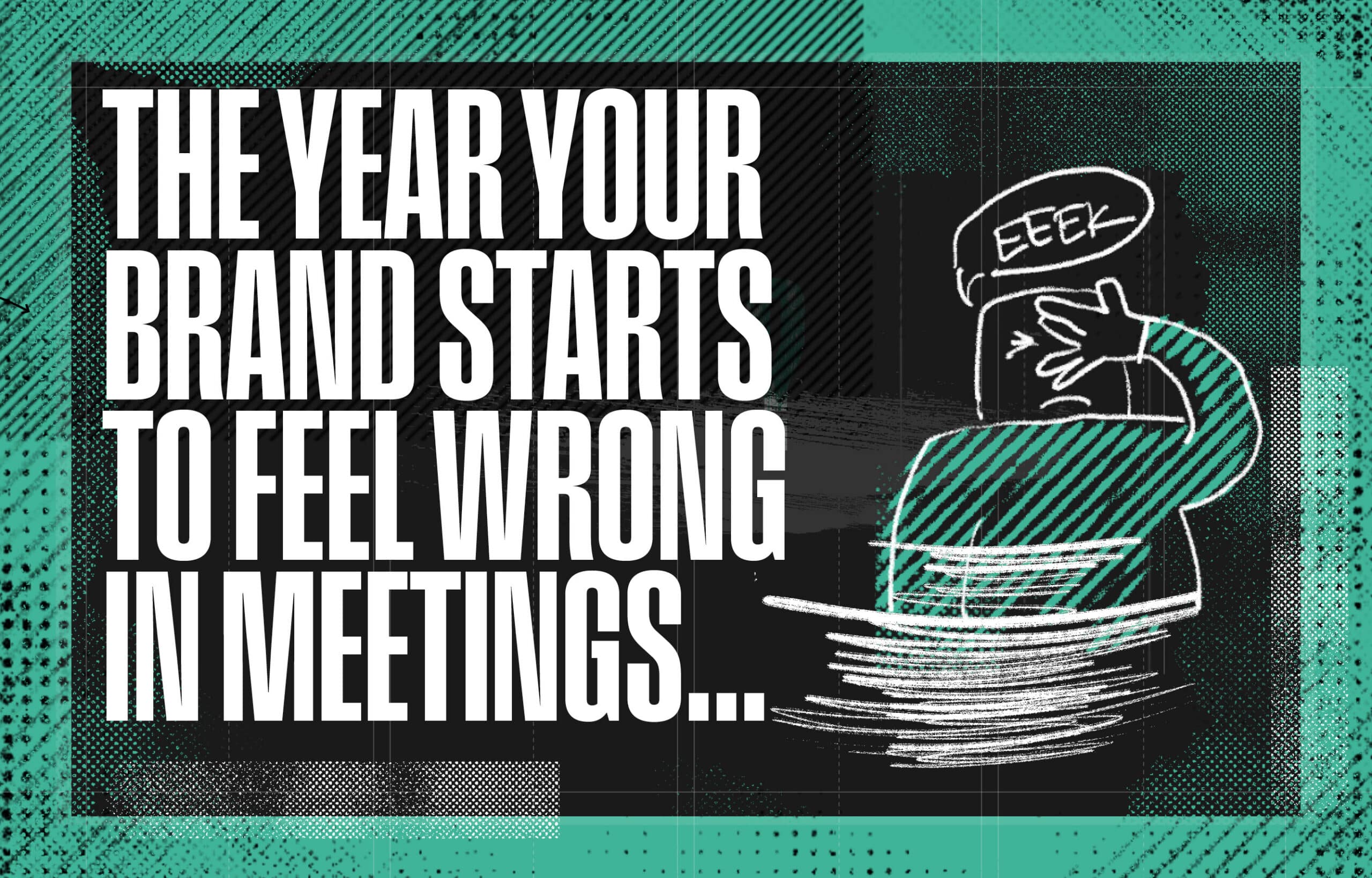
You send it. And then you see it the way they’re about to see it. That slight cringe.
Nobody says anything out loud. But you know, sitting there, that the site doesn’t match the room you’re now in.
That’s not a design opinion. That’s data.
It’s telling you something specific: the brand was built for who you were. Not who you are now.
Why this isn’t really about looks
It’s tempting to describe this as the brand “looking dated,” and sometimes that’s part of it. But the deeper issue usually isn’t aesthetic. It’s a gap between the actual quality of the work you do now and how that work is being represented to people who’ve never worked with you before.
Three years ago, the website was honest. It matched the business at the time — smaller, earlier, finding its feet. The business has moved on since. The brand hasn’t been told.
That gap doesn’t stay still. It widens. Every project you complete at your current level of quality, without the brand catching up, makes the next website visit a slightly bigger mismatch than the last one. Prospects feel it, even when they can’t quite name what’s off. They just quietly adjust their expectations of you downward, based on a website that’s telling them about a business that no longer exists.
It also rarely fixes itself, and it’s worth being honest about why. There’s usually a small voice saying it feels indulgent to spend money on the brand a second time, having already done it once. That voice makes sense — nobody wants to pay twice for the same thing. But that’s not actually what’s happening. The business being described has changed. Paying to have it described accurately isn’t paying twice. It’s paying for something that hasn’t been paid for yet.
What actually closes it
Grow isn’t a lick of paint on the old identity. It starts from the same place Essential does — a full brand strategy, built on where the business actually is now, not where it was when the last version of the brand was built.
From there: a complete visual identity system, not a refreshed logo sitting on top of the old one. Guidelines built for a team, because by this stage you’re rarely the only person touching the brand — there’s a marketing hire, an agency, a partner, someone briefing a printer. And the key applications that actually get used day to day: the proposal template someone opens before a pitch, the deck that goes in front of investors or partners, the signage or van livery that’s been quietly embarrassing someone for a year. Not a document nobody opens. The thing people actually reach for, because it’s built around what they were already reaching for anyway.
Six weeks from the start of the project. Long enough to do the strategy properly rather than skip straight to visuals. Short enough that it doesn’t become its own drawn-out distraction from running the business.
The part people don’t expect
What surprises founders most isn’t the process. It’s how much clearer their own thinking gets partway through it. Building a brand strategy for a business three years in means asking questions that don’t usually get asked once things are already working — what are we actually best at now, who are we actually serving well, what have we quietly stopped being since we started.
Those answers tend to have shifted more than founders expect. The brand work isn’t just catching the identity up to the business. It’s often the first proper look at how much the business itself has moved.
Some of that shift is welcome, and some of it is uncomfortable to say out loud. A service that used to be the whole business might now be a small part of a bigger offer. A type of client the business used to chase might not be the right fit any more, even though nobody’s formally decided to stop chasing them. Naming that honestly is harder than picking a new colour palette. It’s also the part that actually makes the new brand true, rather than just newer.
What changes on the other side
The test isn’t whether the new brand looks more expensive. It’s whether you can send that link before the next serious call and feel nothing at all — no bracing, no caveat you want to add in the message, just the link.
That’s a small moment to describe and a genuinely useful one to reach. If you recognise the cringe — if you already know, roughly, which website visit prompted this feeling for you — that’s usually the sign the timing’s right, not a sign you’ve somehow let it go on too long. The gap is common. Closing it is the part that’s optional, until it isn’t.
Most people carrying this feeling have carried it for longer than they’d admit. A year, sometimes two, of quietly working around a brand rather than through it. None of that time was wasted, exactly. But it wasn’t necessary either, and it doesn’t need to continue past the point you’ve noticed it.
More on what a brand built to grow with the business actually looks like at pattendesign.co.uk/your-brand-should-be-your-best-salesperson/.